I have to say I’m appalled by the letting go of the manager at KPFK. It’s not appropriate for this blog. If you want further info please email me at 3rd1000Yrs@gmail.com
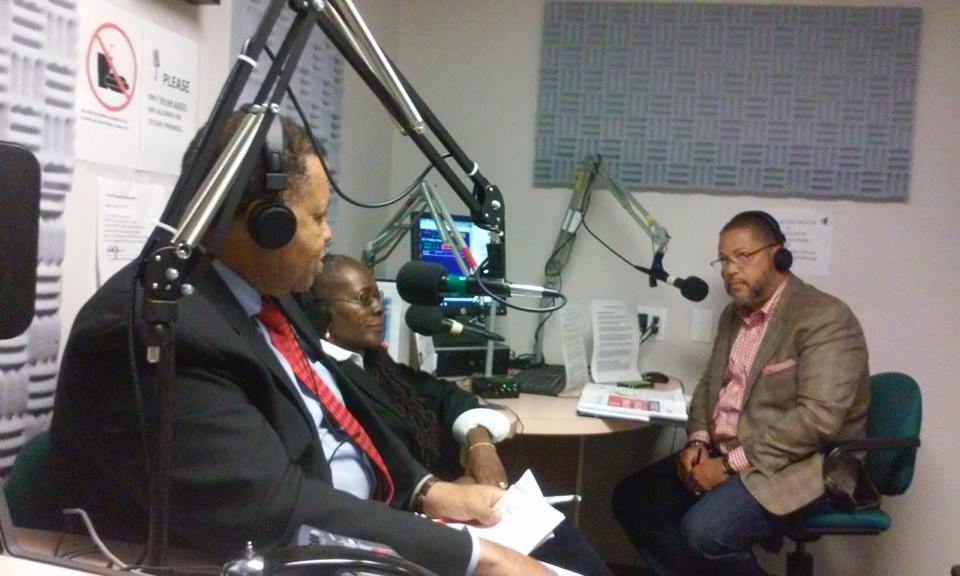
We toasted Zuberi Fields iGM on his departure, faces blurred because I don’t have their permissions now.
There were lots more but I couldn’t get everyone in to this picture, or this room.
Author Archives: 3rd1000yrs
Two from our storied past: Audio: Pacifica Radio Archives Rosa Parks 1956
DISCLAIMER: This is not an official Pacifica Foundation website nor an official website of any of the five Pacifica Radio Stations (KPFA Radio, KPFK Radio, KPFT Radio, WBAI Radio, WPFW Radio). Opinions and facts alleged on this site belong to the author(s) of the website only and should NOT be assumed to be true or to reflect the editorial stance or policy of the Pacifica Foundation, or any of the five Pacifica Radio Stations (KPFA Radio, KPFK Radio, KPFT Radio, WBAI Radio, WPFW Radio), or the opinions of its management, Pacifica National Board, station staff or other listener members.
Interview by KPFA’s Sidney Rogers. [Can jump to 3:42 to skip intro.]
Fritjof Capra at KPFA

KPFA Radio Presents Fritjof Capra Author of The Tao of Physics, The Turning Point, Uncommon Wisdom, The Web of Life, The Hidden Connections, The Systems View of Life
Thursday, June 26, 2014 at 7:30pm
Audio: KPFK’s Elliot Mintz, etc. Pacifica Radio Archives highlights
This week on From the Vault, we present highlights from the Pacifica Radio Archives 12 Annual National Broadcast on November 19th and 20th 2013. Live guests include Comedian Lily Tomlin, Media consultant Elliot Mintz, Truth Dig’s Robert Scheer, audio from Howard Zinn, Nuyorican Cafe Co-founder Reverend Pedro Pietri, Dr. Helen Caldicott, Michio Kaku.
Pacifica Radio Archives
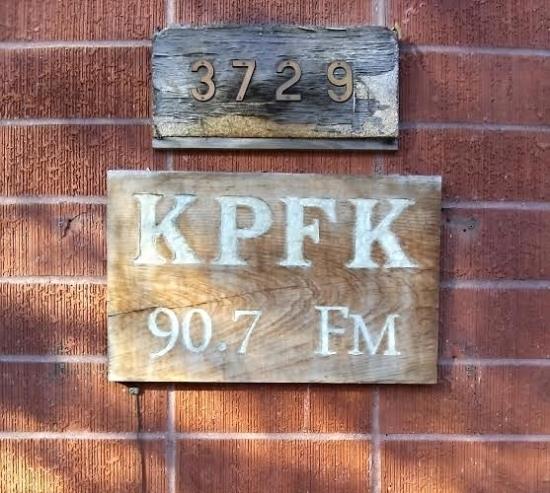
3729 Cahuenga Boulevard West
North Hollywood, CA 91604
Phone: 818-506-1077 or 800-735-0230
Fax: 818-506-1084 Shawn Dellis
shawn@pacificaradioarchives.org
800-735-0230 x 261 – See more at: http://pacificaradioarchives.org/contact-us#sthash.tnNO786c.dpuf
Notes: There are 4 main segments highlights in this program:
Elliott Mintz, legendary underground late-night host in the ’60s & early ’70s, on KPFK’s Something’s Happening, about calling to Embassy in Tehran to the kidnappers during the Iran Hostage Crisis, John & Yoko, and the times. He is known for his work on The U.S. vs. John Lennon (2006), Headshop (1971) and Imagine: John Lennon (1988). In the 1970s he became a spokesperson for John Lennon and Yoko Ono, and took on many other A-list musicians and actors as clients. On KPFK he spoke to the ’60s youth and their issues.
Link & Article-KPFK’s host & activist Margaret Prescod-Sojourner Truth show
How the ‘Grim Sleeper’ got away with killing L.A.’s black women
A former garbage collector, Lonnie Franklin Jr., goes on trial in June for 10 murders. But did the Grim Sleeper kill even more?
It took 30 years before America woke up to what Margaret Prescod was yelling about.
For three decades, the black activist had been raising the alarm that someone was killing black women in South Central Los Angeles and no one listened — not police, not prosecutors, not anybody in power.
At local rallies and protests, Prescod had screamed
“Black lives matter” decades before a police officer shot Michael Brown in Ferguson, Mo., last year, and before teenager Trayvon Martin was gunned down by a white man in Florida in 2012.
Prescod estimates at least 200 African-American women are missing and as many as 100 have been killed on the streets of South Central, an impoverished, gang-ridden part of Los Angeles.
Outrage erupted in the black community when it was rumoured police had labelled the crimes as NHI — “no humans involved.”
“This is a community of colour. A mainly black community, increasingly Latino, but certainly when these murders began it was a predominantly black neighbourhood,” says Prescod.

JUSTIN SULLIVAN/GETTY IMAGES
Women’s rights activist Margaret Prescod seen at a 2008 news conference. She campaigned for years for authorities to do more to find the Grim Sleeper.
“There was, recently, a young white West Virginian college student who went missing and I can tell you, there were daily updates on Google News, on all the major media outlets about her. But how is it possible that you can have this many women missing in South Central L.A., in a relatively small area, and it seems not to matter?” Prescod says.
“I’m not putting down the investigation on the white West Virginian woman. She had a right to that. But so did these women. . . . These women weren’t all school teachers or nurses. The mantle of respectability was kind of ripped off, but what does that matter? These are someone’s daughters and sisters.”
Pacifica Foundation Records, 1949-1987, Wisconsin Historical Society
Tons of historical info-not sure yet how to access.
Link & current KPFK Dispatch by email
Current address to see and/or join email blast:
|
Audio: KPFK’s Greg Gordon interviews Harvey Milk
Audio-WBAI/Pacifica’s Helen Caldicott on Nukes on KPFA
Published on Sep 9, 2014
The Nobel Peace Prize nominee and holder of 21 honorary doctorate degrees hammers Obama and our consumerist mentality.
https://soundcloud.com/flashpoints/flashpoints-daily-newsmag-35
Audio: KPFA Kris Welch interviews Adi Gevins re: Pacifica Radio Archives etc.
Adi Gevins is a San Francisco Bay Area-based radio documentarian who has been referred to as the “fairy godmother of community radio”.[1] She has won an Ohio State Award[citation needed], an American Bar Association Silver Gavel[citation needed], numerous Golden Reels from the National Federation of Community Broadcasters[citation needed], and two George Foster Peabody Awards[citation needed] (with Laurie Garrett for “Science Story” in 1978, and with SoundVision for The DNA Files in 2000), considered the highest accolade one can receive in journalism. Much of her work has been done for the Pacifica Radio station KPFA in Berkeley, California, including “One Billion Seconds Later”, which won the Ohio State Award and “Me and My Shadow”, a documentary about Cointelpro‘s infiltration of the New Left. She served as executive producer for the celebrated public radio documentary series, “The Bill of Rights Radio”.
Kris Welch Day is coming up in Berkeley.
Audio: Patty Hearst tapes excerpt KPFK
They dropped their tape into KPFK’s dumpster, prompting an 8 1/2 hour LAPD search of KPFK for tapes, and jailing of manager Will Lewis for refusing to turn over the tape/s.
Audio: WBAI interviews June Jordan 1968
Audio: Stan Freberg
The classic anti-anti-hero of radio:
Link: Pacifica History many articles
Link: On History by Jeff Land
Video: George Takei on Democracy Now
Video, Audio: KPFK’s, Truthdig’s Robert Scheer rips up Hillary Clinton on Democracy Now
Some of Why KPFK made less money since 2007
Rebel Radio Station KPFK 90.7 FM Los Angeles Fights to Stay On the Air- Gabriel San Roman, former producer for Uprising, wrote in the OC Weekly:
Excerpts: ….”With Dubya in the White House in 2005 and U.S. ground troops occupying Iraq, the political left flooded the streets in protest. KPFK’s anti-war bent stood out in a media landscape too busy genuflecting before a modern-day Moloch demanding sacrifices of youth on the battlefield.”….
….”The economic devastation has listeners looking for alternatives and KPFK is trying to find new ways of being able to stay on-air to deliver them. Just like the anti-war movement energized the station ten years ago, the current moment holds the possibility of it connecting with the disaffected.”….

KPFK’s CAB, Community Advisory Board
KPFK’s Community Advisory Board (CAB) is the local group mandated by the Corporation for Public Broadcasting charged with assessing and reporting the needs of the community served by KPFK to the governing board and management of KPFK. The purpose of the needs assessment is to help inform the governing board and the station management about ways our community radio broadcast can better serve the community through programming. Members are appointed by the Local Station Board, but participation is open to all community members. Meetings are held at least quarterly and often monthly at the radio station or in a neighborhood of our signal area. Meetings are noticed two weeks in advance of the meeting date, and are open to the public. KPFK’s Community Advisory Board meets on Saturday, May 2, 2015 11:30 AM PT and is open to the public. For more information about CAB email Dave at cab@kfpk.org
Financial info-Please support KPFK Los Angeles’ Emergency FunDrive 1 Week only
Average Monthly Costs: These are very close estimates based upon the past 5 months
Personnel Costs $150,000
Utilities $11,900
Telecom Services (internet, phone, ISDN) $14,532
Maintenance (we have been deferring a lot of maint. these past 5 mos) $2,100
Credit Card Fees (processing and return fees) $5,300
Thank You Gifts $44,000
Pacifica Radio Archive Services $4910
National Office Central Services $36,800
Postage and related expenses $4780
Average monthly cost to fund the station $307,700
It costs us over $7 a minute just to be on the air. Doesn’t sound like much?
Well that’s over $10, 000 a day ($10,086.47 to be exact)
Over $ 70, 600 a week
Over $ 307, 000 a month
Link: KPFA & Pacifica History by Years
Video: Mark Torres, also of Pacifica Radio Archives, show on KPFK, shows Master Control
15:41 Rough Church is the band
On the mikes after the performance Greg Franco,Kaitlin Wolfberg, Fredo Ortiz, Carey Fosse, Jose Esquivel, Tracy H-ill on Mark Torres‘ show. And Dante Pascuzzo and Manny’s Estudio
And shows Studios B and C
Travel Tips for Aztlan, music show, Saturday nights at 10:00 pm
Link to bio of new Chief Executive Officer of Pacifica & Link to 5 min. speech audio
Editorial: Essay by a friend of KPFK & response
“21 March 2015 On KPFK and Pacifica
Below are some of my musings, taken from a private e-mail to a KPFK activist of long standing.I am a marginal KPFKer (although I do send them a little money monthly and listen to Ian Masters and a few other things somewhat sporadically). So my ideas may be ignorant or less than fully informed. But I have an idea and a question that may interest you. First the question:
It would be a terrible tragedy to see Pacifica, and especially KPFK, lost to the media raptors. I’m sure Comcast would love to have a 100,000 watt FM station in L.A. But the current situation is so clearly unsustainable that people are going to have to sacrifice some sacred cows and make some major changes if the institution is to survive. One of those sacred cows could be the cumbersome governance, and another may be that there would have to be a somewhat more uniform standard of professionalism and “objectivity.” I know that’s a landmine, but the fact is that many people perceive KPFK and especially KPFA to be powerful radio stations mostly dominated by people in the near lunatic fringe. My experience is that that is far from true (usually), but that IS a common perception among the hordes of Hillary supporter types. And they MUST be part of KPFK’s audience or the station can’t survive.
* my response: ‘
KPFK’s computer show moves to 7 pm, Wed.
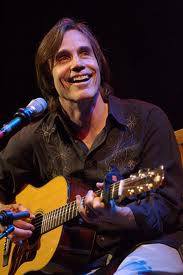
KPFK Frequent guest and contributor Jackson Browne
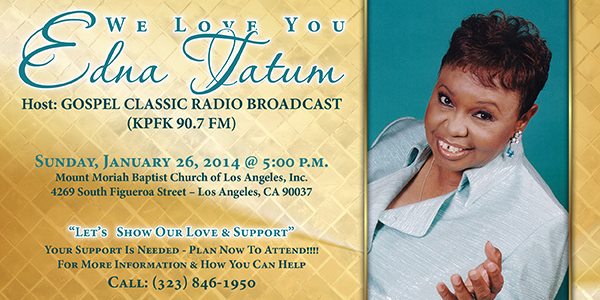
KPFK’s Gospel host Edna Tatum passed but the show is carried on
Video of Play: Richard Montoya writer of “Chavez Ravine”
Richard Montoya of Culture Clash, writer of “Chavez Ravine”‘s latest play
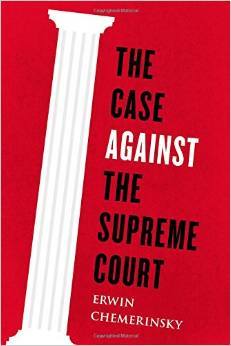
KPFK frequent guest Erwin Chemerinsky
Today/Wed 4-5pm on 90.7FM, streaming on kpfk.org:ERWIN CHEMERINSKY says the Roberts Court’s conservative agenda is well known—but nothing new. The Supreme Court has largely failed throughout American history at its most important tasks and at the most important times. Erwin is founding dean of the law school at UC Irvine; his new book is The Case Against the Supreme Court.
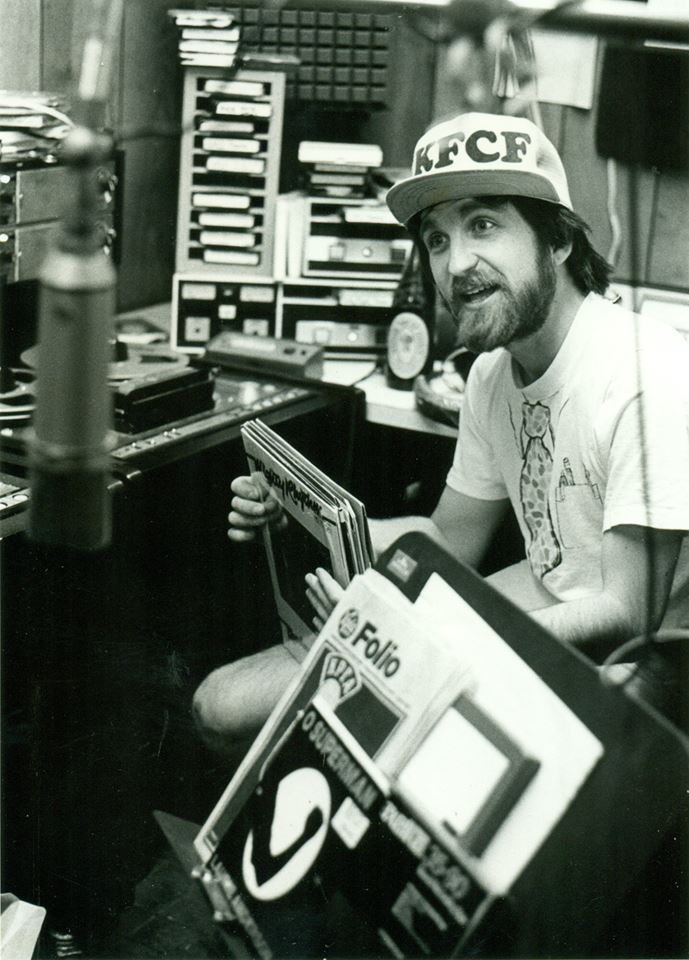
KFCF Fresno, our first affiliate, Rychard Withers
WPFW studios
John Cheeks on DC Politics. DC Politics airs Thursdays at 1-2pm.


WPFW interviews Farrakhan about Libya
April 1st, 2011 Minister Farrakhan Gives Detailed Information About Gaddafi’s work to liberate Libya & Unite all of Africa .
Text:
http://blackhistory.com/content/207772/minister-farrakhan-interview-with-wpfw-radio-april-1-2011
WPFW carries on listener-sponsored radio
Over 60 years ago Lew Hill wanted to develop a voice for peace. He had faith that the people would pay for what they believed in. Pacifica is the model for NPR and PBS. WPFW does not accept underwriting, and is not associated with a university. WPFW exists through your generosity. We Are Because You Are. If you rely upon WFPW, WPFW relies upon you to ensure our ability to bring you radio you love. Please call 202-588-9739 or visit us on-line at www.wpfw.org to make your contribution today!

WPFW screens “Hands Up Don’t Shoot Youth Movement” by Ralph L Crowder
Screening the phenomenal “Hands Up Don’t Shoot Youth Movement” film by Ralph L Crowder


WPFW presents Jazz & Justice event
Tickets are currently still available At The Door for $20 per person.

WPFW has Poetry event
In the #DMV we love #poetry! Come celebrate DC & LA Spoken Word as a preamble to National Poetry Month AND help support WPFW andPacifica Radio Archives,

WPFW has Latin Soul event

Unity Rally by (WPFW’s) Verna Avery Brown, Afrika Abney
WPFW and National News’ Verna Avery Brown Countdown to Iraq
KPFK plays D.T. Suzuki

-
In accordance with restrictions specified in this section, the following synthetic substances may be used in organic crop production: Provided, That, use of such substances do not contribute to contamination of crops, soil, or water. Substances allowed by this section, except disinfectants and sanit…ECFR.GOV
Frances Moore Lappe introduced by Sonali Kolhatkar
Sonali introduces Frances Moore Lappe at All Saints, Pasadena, maybe 2011 or 2012. By Allan Coie
Lappé (born February 10, 1944) is the author of 18 books including the three-million copy Diet for a Small Planet. She is the co-founder of three national organizations that explore the roots of hunger, poverty and environmental crises, as well as solutions now emerging worldwide through what she calls Living Democracy. Her most recent book is EcoMind: Changing the Way We Think to Create the World We Want.
Folio: The Full Text of a KPFK Folio/program guide from 1979, & one from 1983
1979 I think these were scanned from a marginal-quality hard copy:
https://www.archive.org/stream/julyfolio1979kpfkrich/julyfolio1979kpfkrich_djvu.txt
http://www.archive.org/stream/janufolio83kpfkrich/janufolio83kpfkrich_djvu.txt
1985: Roy Tuckman, Anita Styles, Roberto Naduris, Jenny Hubbard, Don Rush, Pam Burton, John engineering, Corey Dubin-
Links: Fairness Doctrine struck down in 1987, & Equal Time Rule
The Fairness Doctrine was a policy of the United States Federal Communications Commission (FCC), introduced in 1949, that required the holders of broadcast licenses to both present controversial issues of public importance and to do so in a manner that was, in the Commission’s view, honest, equitable and balanced. The FCC eliminated the Doctrine in 1987, and in August 2011 the FCC formally removed the language that implemented the Doctrine.[1]
https://en.wikipedia.org/wiki/Fairness_Doctrine
The equal-time rule specifies that U.S. radio and television broadcast stations must provide an equivalent opportunity to any opposing political candidates who request it. This means, for example, that if a station gives one free minute to a candidate in prime time, it must do the same for another candidate who requests it. The equal-time rule was created because the FCC thought the stations could easily manipulate the outcome of elections by presenting just one point of view, and excluding other candidates. It should not be confused with the now-defunct Fairness Doctrine, which dealt with presenting balanced points of view on matters of public importance.
There are four exceptions to the equal-time rule. If the airing was within a documentary, bona fide news interview, scheduled newscast or an on-the-spot news event, the equal-time rule does not apply. Since 1983, political debates not hosted by the media station are considered “news events,” and as a result, are not subject to the rule. Consequently, these debates may include only major-party candidates without having to offer air time to minor-party or independent candidates. Talk shows and other regular news programming from syndicators, such as Entertainment Tonight, are also declared exempt from the rule by the FCC on a case-by-case basis. [1]
This rule originated in §18 of the Radio Act of 1927; it was later superseded by the Communications Act of 1934. A related provision, in §315(b), requires that broadcasters offer time to candidates at the same rate as their “most favored advertiser”.
Track Congresspersons’ votes
Article: KPFK more History
KPFK more History
1949 KPFA/Pacifica goes on the air April 15
1959 KPFK goes on the air. Lectures & classical music are the mainstay of the programming, Terry Drinkwater is the first manager.
1961 KPFK moves to North Hollywood.
1961 KPFK wins George Foster Peabody Award for excellence in broadcasting
1962 KPFK broadcasts women’s history profiles of Dorothy Healey and Elizabeth Gurley Flynn–programs that are later used in SISS Hearings charging Pacifica is communist infiltrated.
1962 The FCC withholds the license renewals of KPFA, KPFB, and KPFK pending its investigation into “communist affiliations.” Pacifica was never ultimately cited in any of these or subsequent inquiries. Ironically, the FCC chair later denounces the broadcasting industry for not defending Pacifica during its investigation of the foundation.
1963 The senate intelligence Subcommittee investigates whether station management are pacifist or communist
1964 The Federal Communications Commission (FCC) renews the licenses of all three Pacifica stations after a three-year delay.
1965 KPFK wins awards for its coverage of the Watts ‘riots’.
1970 KPFT in Houston goes on the air and is bombed off twice during its first year by Ku Klux Klan attacks on its transmitter tower. After months of inactivity by federal agents and Houston police, Pacifica mounts a media campaign. Federal agents ultimately arrest a Klansman and charge him with plotting to blow up KPFA and KPFK, as well as the actual KPFT bombing.
1970 The Pacifica stations (including KPFK) decline to join the new public radio service, National Public Radio.
1971 Noted folklorist Mario Casetta joins the station’s music staff, introducing World Music to the airwaves.
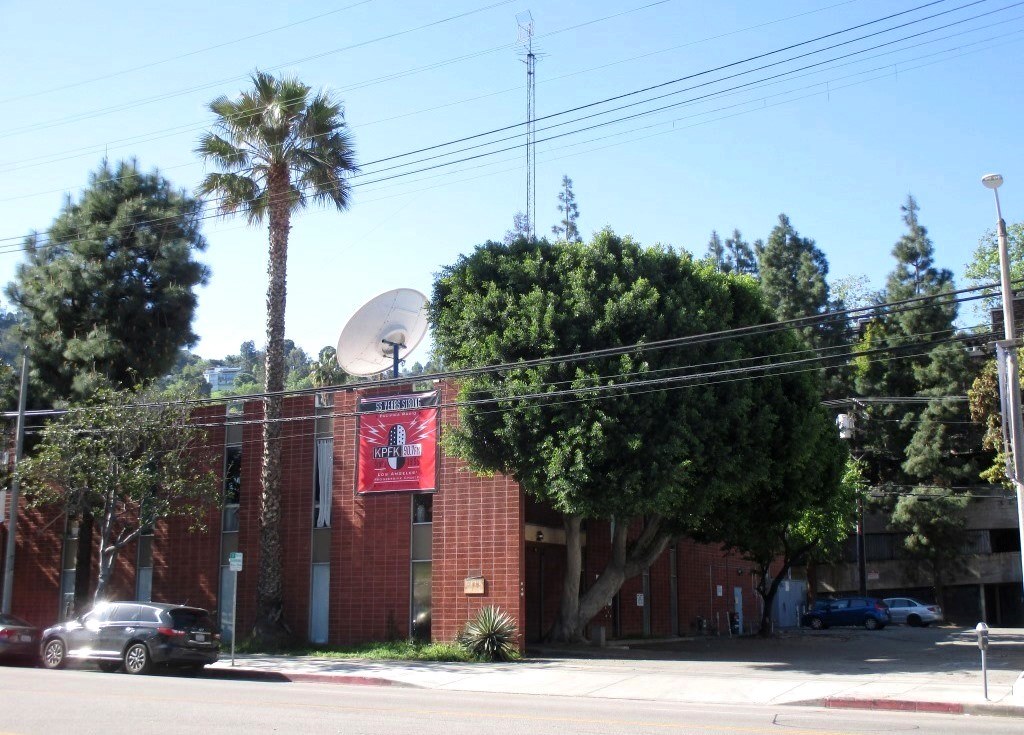
1971 KPFK builds its custom radio building.
1972 The Pacifica Radio Archive and Pacifica Program Service are established in Los Angeles to preserve and distribute Pacifica programming to schools, libraries, individuals, and other community radio stations across the country.
1974 The Symbionese Liberation Army delivers the Patty Hearst tapes to KPFA/Berkeley and KPFK/Los Angeles. In search of documents pertaining to domestic revolutionary groups, the LAPD searches KPFK for 8 ½ hours. KPFK Manager Will Lewis is jailed for refusing to turn the tapes over to the FBI.
1975 KPFK’s transmitters go up on Mt. Wilson.
1980 Sharon Maeda becomes Executive Director of Pacifica, markets the sub-carrier frequencies, temporarily manages KPFK, and moves the Pacifica Radio Archives and the National Office into KPFK’s building in North Hollywood.
1984 With money troubles seeming insurmountable, the station goes off the air for 10 days late in September.
1986 After a broadcast of a play about AIDS, KPFK forces the FCC to adopt more narrowly defined rules regarding indecent speech.
1987 Lady Smith Black Mambazo makes their first live U.S. radio appearance, on KPFK/Los Angeles.
1989 KPFK creates its apprenticeship program to train women and people of color in radio production skills.
1992 Senate Republicans put a hold on funding for the Corporation for Public Broadcasting, claiming “liberal bias” on a host of issues, including environmental coverage. A bill is passed imposing “objectivity and balance” conditions on CPB funding. Almost alone among broadcasters, Pacifica protests any content-conditional funding, pressing CPB to shield all news programming and editorial integrity of individual producers–which CPB agrees to in its implementation protocols. Pacifica observes that no other broadcasters, commercial or religious, are any longer subject to access and balance requirements of the now-repealed Fairness Doctrine–making public broadcasters alone subject to editorial restrictions. Immediately after passage of the content restrictions, CPB Board member Victor Gold targets KPFK for strident African American programming and controversial speech aired during Black History month, by filing an FCC complaint.
1993 CPB Board member Victor Gold calls for de-funding Pacifica, echoing lobbying campaign orchestrated by right-wing media critics. In a unanimous vote, CPB reaffirms Pacifica’s funding irrespective of program content. Senate Minority Leader Robert Dole (R-KS) threatens public broadcasting with Congressional revenge, his aide explaining: “The First Amendment, freedom of speech, doesn’t apply, because we are able to put conditions on the grants of federal money. The same as we do for farmers.” Pacifica launches a campaign for unconditional funding and self-defense, led by a tremendous outpouring of “fightback donations” from listeners nationwide. CPB funding narrowly escapes cuts in the House of Representatives, with program content the driving issue. A lobbying effort keeps Pacifica funding off the Senate agenda. This is the second year in which Pacifica has received no discretionary funding from CPB (only the matching funding based upon listener contributions).
1993 Pacifica wins its third Court of Appeals ruling in six years, overturning the FCC restrictions on “indecent” programming as unconstitutional restrictions of the First Amendment rights of the radio audience.
1996 Former California Governor and future mayor of Oakland Jerry Brown hosts “We the People” on KPFK, & KPFA, a daily talk show that features interviews with Noam Chomsky, Paolo Soleri, Ivan Illich, and Gore Vidal.
1998 KPFK puts its Santa Barbara translator into operation.
2001 On December 12th the Pacifica board and dissident groups sign a settlement that leads to the democratization of the Pacifica radio network. The listener-subscribers win the right to vote for representatives on their local station board.
When KPFK began broadcasting on July 26, 1959, it was the only public radio station in Los Angeles and the second public station in the country. Notable Angelenos sat on the advisory board including Aldous Huxley, James Mason and Vincent Price, and architect Richard Neutra. On April 27, Los Angeles commemorates Neutra Earth Day. Just like worldwide Earth Day (observed on April 22), Neutra Earth Day emphasizes sustainability and green lifestyles. But like most things in Los Angeles, it’s done with a Modern twist: it celebrates Neutra as a pioneer of the environmental movement.
The station was dedicated to bringing diverse voices together and thereby helping to forge a peaceful world. From the station’s earliest days, KPFK invited opposing points of view on the air. Communist Party organizer Dorothy Healy provided regular political commentaries, as did conservative activist Howard Jarvis. KPFK was an open door for debate.
Because of its courageous championing of First Amendment freedoms, controversy dogged the station. In 1964, the FBI asked the Attorney General to investigate KPFK broadcasts of the award-winning play, Who’s Afraid of Virginia Woolf? and a program in which two lesbians discussed their lives. Seven years later, the FCC investigated the station because of a broadcast about a local college professor who had been fired after discussing a sexually explicit poem about Jesus in class.
KPFK also became the recipient of numerous messages from revolutionary groups active in the 1970s. The LAPD spent 8 ½ hours rifling through station documents in pursuit of confidential materials received from the Weather Underground and the Symbionese Liberation Army. Station manager Will Lewis went to jail twice for refusing to turn over those documents,
In the 1980s, KPFK went to the Supreme Court to protect the right of all public radio stations to editorialize. Later in the decade, the station defended its broadcast of a sexually explicit play about a man dying of specific criteria for judging indecent speech on the airwaves.
Over the years, KPFK has won some of journalism’s most coveted awards including dozens of “Golden Mikes”, a George Foster Peabody Award and an Alfred I. Dupont Award.
2015-04-06 36 paid employees
Featured on Pacifica, Danny Schechter has passed
“That is definitely Johnny [Clegg] next to Danny. Here’s what he just wrote on my FB page about Danny: “‘So sorry to hear of the passing of Danny. He was a great strategist and friend of South Africa during the dark days of Apartheid and his contribution in aiding the formation of the South African Musicians’Alliance and other progressive cultural organizations is remembered with appreciation. Later in his career he was a brilliant media analyst and fighter for alternative communication platforms, promoting a media free from money and political interests. He will be sorely missed. Hamba kahle Danny.'” In photo below: 1 unk., JohnnyClegg, DannySchecter, 4 unknown
READ DANNY’S LATEST BOOK, When South Africa Called. Free pdf download of the complete book at http://coldtype.net/africabook.html
F“…From there it was on to Cornell, Syracuse, the London School of Economics, and Harvard as a Neiman Fellow. But this is only a small part of his life’s journey. He joined the Northern Student Movement in high school and became actively involved in the Civil Rights Movement, going down to Mississippi in 1964. He became a leader in the movement to end the Vietnam War, was a member of SDS and began a lifelong commitment to South Africa in 1967 as an original member of the “London Recruits.” He fought tirelessly against Apartheid from then on. Danny never hesitated to put his convictions on the line. In the 1970s, he turned back to his first love—journalism–and became the “news dissector” at radio station WBCN in Boston. He wove news and music together in collages that not only reported the day’s events but also helped explain how the world worked. He was a huge influence on those who valued his independent perspective—and trusted him. He went on to become a prolific, Emmy award-winning TV producer and filmmaker, who made “South Africa Now”, 6 films about Mandela, and spent decades criticizing and cajoling the media to do a better job covering the news. He interviewed Bob Dylan. He walked with Jesse Jackson. He embraced the Dali Lama. Malcolm X nicknamed him “Danny X….”
KPFA’s Winter Crafts Fair
https://instagram.com/p/h6a9-pCaKA/
One of hundreds of exhibitors at the KPFA craft fair! Music! Food! Clothes! Art! Can’t make it? Support free speech radio at KPFA.orghttp://instagram.com/p/h6a9-pCaKA/
Great turn-out at the KPFA Craft Fair! Can’t make it? You can support Free Speech Radio online at KPFA.org
KPFA’s Mitch Jeserich on the NSA
On the air, Letters and Politics with Mitch Jeserich and guests on NSA.www.kpfa.org

Jane Goodall at KPFA

Martin Luther King Jr. Middle School in Berkeley, California


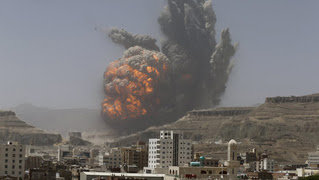
Warplanes from the Saudi-led coalition struck the Yemeni cities of Aden and Ibb early today despite a previous claim by Riyadh that it had ended its nearly month-long operation. Saudi officials said Wednesday they will limit their military role in Yemen but continue to respond to Houthi attacks. Human Rights Watch, meanwhile, reports Saudi Arabia appears to have deliberately bombed a humanitarian aid warehouse run by Oxfam that contained supplies to facilitate access to clean water for thousands of households. The International Committee of the Red Cross has warned the humanitarian situation in Yemen is “catastrophic.” 
Plus we’ll have a guitar signed by all the members of Los Lobos that we’ll be raffling off and special guests will be dropping by and driving through.